

In Pakistan’s church liturgy, the Punjabi Zabūr (“Psalms in Punjabi”) are central. Originating in the late 19th and early 20th centuries through the tireless efforts of Rev. Dr. Imam-ud-Din Shahbaz (1845–1921). A Punjabi convert to Christianity who translated all 150 psalms into Punjabi poetic verse. He, then, collaborated with a music committee to set them to South Asian ragas/melodies. The 1908 edition, Punjabi Zabūr: Desi Ragan used Western musical notation for easy learning. To reinforce cultural and musical identity, which, with time, became vital to Christian worship across denominations.
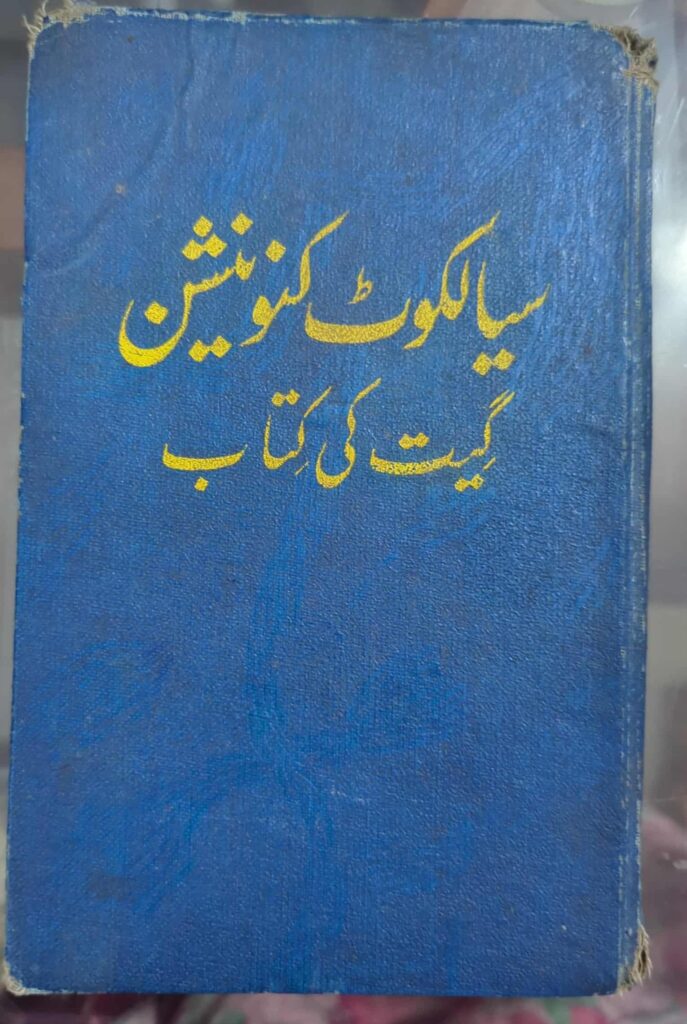
The Sialkot Convention (1904) introduced Geet Ki Kitab—a collection of psalms (Zabur) and hymns (Geet) compiled for worship. Since many Pakistani Christians were oral learners, the melody-driven Psalms, memorized by rote, became known as a “Bible of the illiterate” central to community identity and spiritual growth. Punjabi has often been undervalued, seen as the language of the illiterate compared to English and Urdu, but these Spirit-filled Psalms united believers to praise God in their own vibrant and beloved language.
My Spiritual upbringing
I grew up in home churches, where most couldn’t read or write and spoke Punjabi. So, they memorized the Punjabi Zabur by listening attentively, including my grandparents. Even before I could read, I heard and sang psalms at home and church. Having a songbook in Punjabi is a blessing, which allows us to carry the legacy forward and share it with new learners. These psalms are zealously sung by both young and old. While new songs come and go, Punjabi Zabur endured for its rich theology that continually reminds us of God’s dominion.
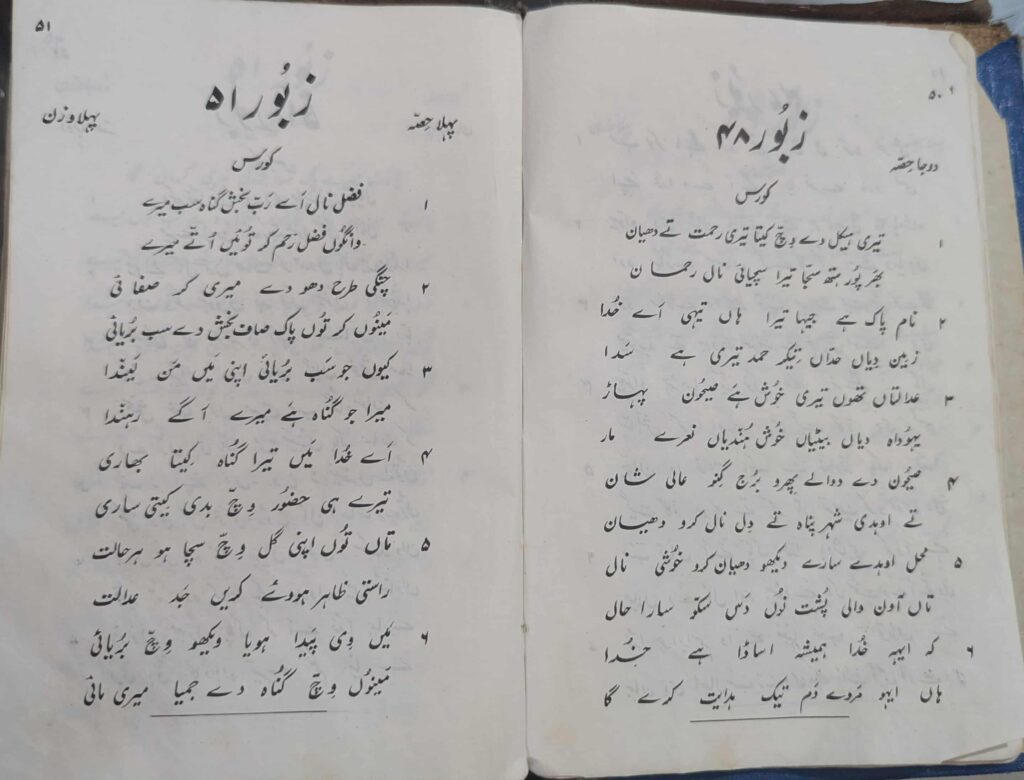
The most popular Zaburs/Psalms are: Zabur 9 “Daim Yahowah Ya Raab,” 18 “Appy Upro hath wadh k,” 24 “Rab Khudawand Badshah,” 45 “Sun ai bati tu ai soch ley,” 51 “Fazal Naal Aye Raab,” 121 “Akhiyan Chukna Haan,” and 139 “Khudaya Teri Rooh to mae.” Many of these psalms are ascribed to specific moments, such as the opening and closing in services or weddings and funerals. To praise, lament, and meditate. Psalms also remind the Pakistani Christians of Lord’s protection and judgment amid their suffering.
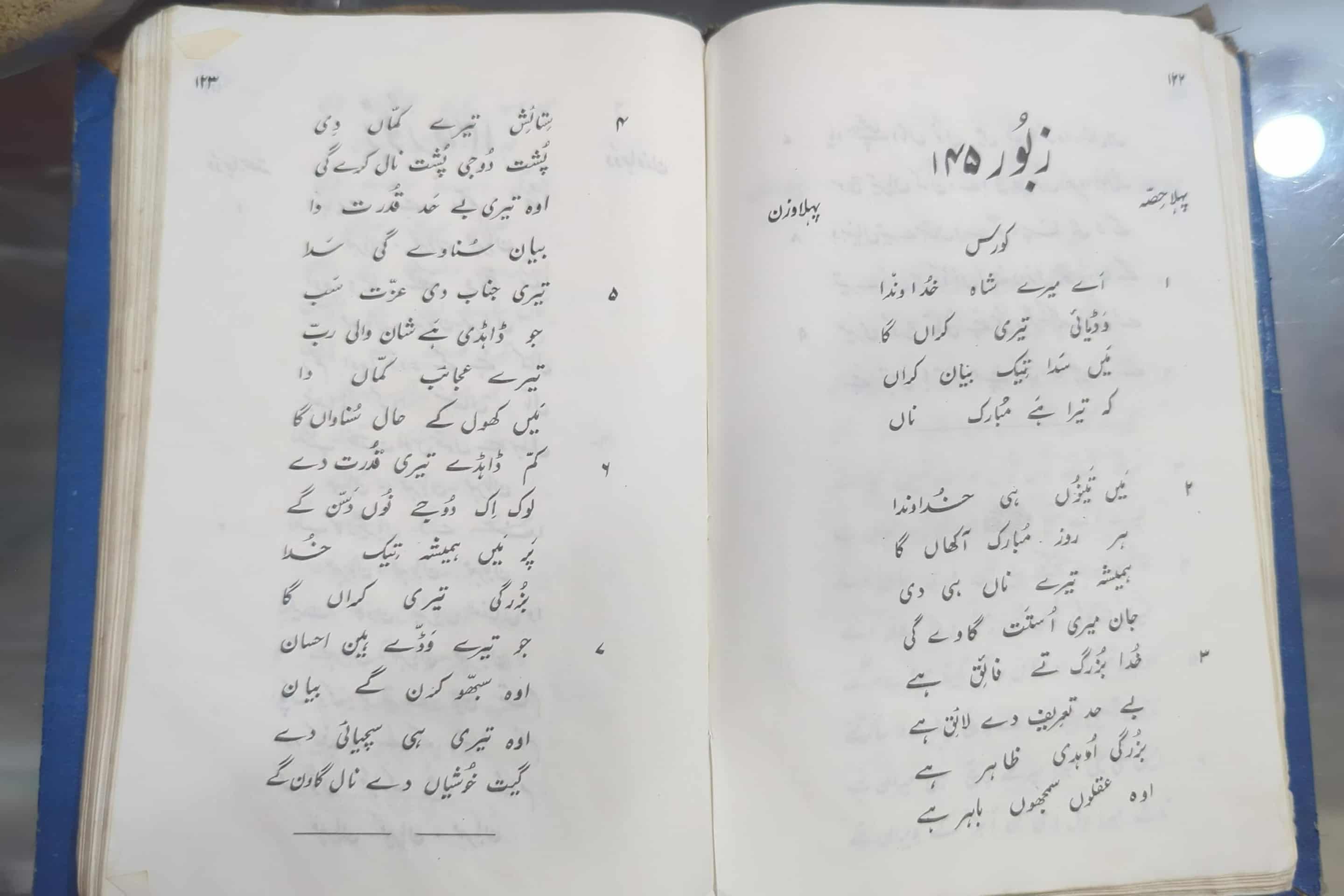
My favorite is Zabur 145, “Aye Mere Shah Khudawanda” or in English “I will exalt you, my God the King; I will praise your name for ever and ever”. A communal devotion that combines artistic beauty with spiritual depth. To celebrate God’s unmatched majesty and faithfulness. To exalt the Shah Khudawanda—the Lord and King—whose greatness surpasses all measure, and whose praise must continue from generation to generation. To proclaim His splendor and mighty acts, His grace and righteousness. Such a representation of the Almighty stirs my soul in reminding me of my finitude in comparison to His infinite glory.
Let everything praise the Lord!
We use instruments: tabla, harmonium, dholak, tambourine, and manjira. Even without them, our worship is not hindered. God cares about the sincerity of our hearts than the instruments in our hands. Oftentimes in singing psalms, God shapes the atmosphere and sparks a ripple effect. When one begins singing, others start humming. Others singing along. Some may drum on the table; some may tap metal pans. While others join in clapping. Soon all rejoicing, full praise of His glory!
In Pakistan, we do not argue about instruments or whether to sing old or new hymns. Instead, most are concerned with the depth of the theology and are grateful for the gift of worship. We must be mindful that many Christians still live in shadows and worship secretly. And God sees! Though we are also persecuted, we are thankful for every moment when we can lift our voices freely and boldly in our heart language for our Good Lord. Thus, raise your voices, hands, and hearts in thanksgiving and awe to praise the Lord—the King!
Beautiful writing about your heritage, Rachel, thank you for sharing this with us. Praise is for us all, and singing the Psalms is so powerful.
Wonderful 🙂
Amazing 👏
That is inspirational Rachel!