

Every December, billions of dollars change hands as people buy gifts for friends, family, coworkers, and neighbors. In the United States alone, Christmas spending now exceeds $1 trillion annually, with Christmas gift-giving in gift cards, decorations, gadgets, clothing, and luxury items accounting for a significant portion of that figure.
Some argue the tradition of gift-giving is from Santa Claus, but evidently it is traced back to the account in Matthew’s Gospel, where the Magi brought gifts of gold, frankincense, and myrrh to the Child Jesus (Matt. 2:1-12). Historically, those gifts were not sentimental offerings, but costly, symbolic gifts fit for a king, priest, and one destined to suffer. Their act of giving was one of worship, recognition, and reverence, not social exchange or obligation. Yet over time, this sacred gesture has been reduced to a massive consumer industry, where love and celebration are frequently rated by purchasing power rather than purpose.
God gave the greatest gift
The Christian giving begins not with abundance but with the desperation of humanity. Humanity that had no hope of salvation and no alternative source of redemption. It was trapped in the vicious cycle of sin and death. Until God gave the greatest gift of all time, to all at once—His Loving Son. “For God so loved the world, that He gave His only Son, so that everyone who believes in Him will not perish, but have eternal life” (John 3:16).
God is not like Santa Claus, who gives only to the good children. He did not wait for humanity to be improved or deserved; He gave first, freely, and sacrificially to all who believe in His Son. Even to the naughty kids of every nation and language, since He is an unbiased God (Romans 2:11). Christ was not a gift exchanged among equals, but given to those who could not repay Him, could not earn Him, and would perish without Him.
Incarnation of Jesus
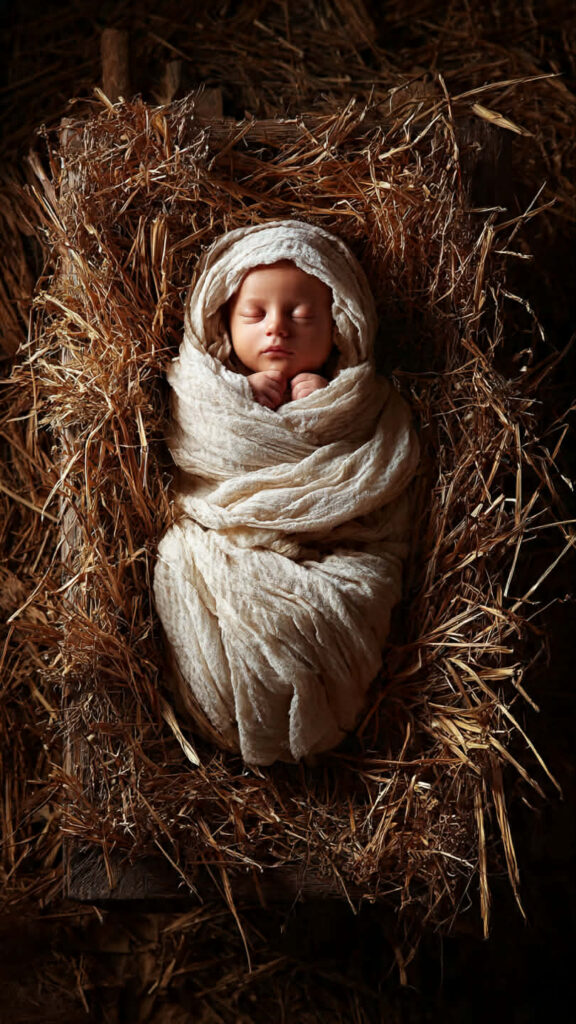
Christmas celebrates the incarnation: God entering human need, poverty, and brokenness in flesh. The irony is that Christmas is now celebrated with excess while ignoring those still living in desperate need. Sadly, in today’s hyper-consumer culture, gift-giving mostly circulates within comfortable circles that already have enough or more than enough. While billions are spent on gifts, Christmas trees are decked up with lights and ornaments, and tables are adorned with many special meals, millions of people globally lack food, clean water, shelter, and healthcare. Some do not even have a good meal to eat or nicer clothing to wear on Christmas Day. The imbalance is sobering.
How many of us like to honor a person on his or her birth? I believe the majority does. But how do we feel about that spoiled kid who, at another kid’s birth, wants all the attention, all the gifts, or even wants to blow out the candles? I hope none of us. I hope none of us wants to be that spoiled child on Christ’s birthday. Thus, if we are clear that it is Jesus’ birth, then gifts should be given to Him, like how the Magi brought gifts to the King Jesus.
Celebrating Jesus
One of the ways Jesus wants us to celebrate is by taking care of the last, the least, and the lost. In Matthew 25:31-46, Jesus speaks about the judgment day when all nations will gather, and the sheep will be separated from the goats. The sheep will be on the right and the goats on the left. Then the King will say to those on the right, “Come, you who are blessed by my Father; take your inheritance, the kingdom prepared for you since the creation of the world. For I was hungry and you gave me something to eat, I was thirsty and you gave me something to drink, I was a stranger and you invited me in,I needed clothes and you clothed me, I was sick and you looked after me, I was in prison and you came to visit me.”
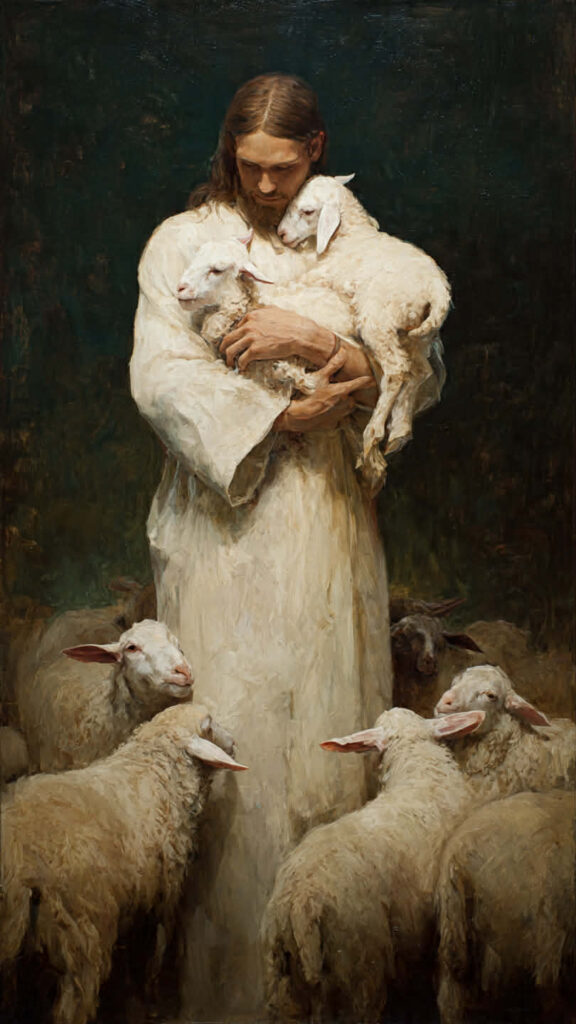
Here, Jesus identifies Himself to the hungry, thirsty, the stranger, the naked, the sick, and the prisoners. This passage is both present and future. Future, because Jesus says that the righteous will be rewarded inheritance in His Father’s kingdom. Present, because Jesus calls us to be among the righteous. For they took care of the least in their everyday life so well that they did not keep any record of their generosity. Jesus saw it all, and He declared that they did it to Him (vv. 37-40). But there is eternal condemnation for goats on the left, who did nothing for the suffering of the least. Hence, did nothing for Him (vv. 41-46).
Give as God gives
One of the greatest gifts to the Great Shepherd is to protect and care for his sheep. We, as the sheep of Christ, become shepherds when we feed like Him. This is not just charity; it is worship. It is an encounter with Christ. This must challenge us to examine our hearts this Christmas. There is nothing inherently wrong with giving gifts to loved ones. It is an expression of joy and gratitude. But when giving becomes overconsumption, consistent hoarding, detached from compassion and justice, it loses its spiritual depth.
God’s giving was centered on love that meets real need. If we desire to give as God gives, then we need to give sacrificially. By interrupting our routines and redirecting a portion of Christmas spending toward feeding the hungry and clothing the poor. By giving time, hospitality, and dignity, gifts so rare that they matter more than material things. When our giving mirrors God’s heart—reaching those who could not give back—it reflects the gospel. Thus, the greatest gifts are not under the tree but lived out through love for God gave Christ to us when we had no hope at all.
Good thoughts for Christmas, I especially appreciated this thought you shared, Rachel: “God’s giving was centered on love that meets real need. If we desire to give as God gives, then we need to give sacrificially.”
Are we giving in the name of Jesus to meet needs! Thank you for this article.
beautiful and timely message
God bless you and give you a year of fruitful service
Beautiful message